How Peptide Brands Can Build a U.S. Digital Marketing Strategy

Digital Marketing Strategy

The U.S. peptide market is growing fast. Interest in peptides for skincare, wellness, fitness, and research keeps rising, and more brands are entering the space every quarter. But this is not a category where you can copy a standard e-commerce playbook and expect results. Ad platforms restrict health-related content, regulators watch claims closely, and customers want proof before they trust you.

That is why peptide marketing USA requires a specialized approach. Brands that win combine compliant messaging, strong SEO, educational content, and trust-building at every stage of the funnel.

This guide walks through how to build a complete peptide digital marketing USA strategy, whether you are launching a new brand or scaling an existing one. It also explains when working with a peptide marketing agency USA makes sense.

Digital Marketing Strategy

Why Peptide Marketing in the USA Is Different

Most industries can run ads, publish claims, and scale quickly. Peptide brands face extra layers of complexity.

1. Regulatory scrutiny. Marketing claims about health outcomes are regulated. The FDA and the Federal Trade Commission (FTC) both pay close attention to how health and wellness products are described. Overpromising can lead to warning letters, account bans, or legal trouble.

2. Advertising restrictions. Google, Meta, and other platforms have strict rules for health, supplement, and medical-adjacent products. Review Google Ads healthcare and medicines policy and Meta’s advertising standards before you spend a dollar.

3. High customer skepticism. Buyers research heavily before purchasing. They compare sources, read reviews, and look for signs of legitimacy like transparent sourcing, lab testing, and clear product information.

4. Education-first buying journeys. Many prospects do not fully understand peptides. Brands that teach well earn the sale.

These challenges are exactly why a purpose-built peptide marketing agency USA can save time, budget, and risk.

Step 1: Define Your Compliance Foundation First

Before writing a single ad or blog post, define what you can and cannot say. This protects your brand and your ad accounts.

  • Know your product category. Whether your product is positioned as a cosmetic, a supplement, or a research-use product changes what language is appropriate.
  • Avoid disease and treatment claims unless your product is approved for them.
  • Substantiate every claim. The FTC expects competent and reliable evidence behind health-related statements.
  • Use clear disclaimers and accurate product labeling across your site, emails, and ads.
  • Consult a qualified attorney or regulatory advisor who understands your specific product.

A strong peptide marketing USA plan starts with a compliance checklist that your whole team, and any agency partner, follows.

Step 2: Understand Your U.S. Audience Segments

“Peptide buyers” is not one audience. Segment them so your messaging is specific and relevant.

  • Skincare and beauty consumers interested in ingredients, routines, and visible results.
  • Fitness and wellness enthusiasts who research supplements, recovery, and performance.
  • Practitioners and clinics who want reliable suppliers and professional-grade information.
  • Researchers and laboratories (for research-focused brands) who value purity data, documentation, and consistency.

For each segment, map out the questions they ask, where they search, what objections they have, and what proof they need. This becomes the backbone of your peptide digital marketing USA content and campaigns.

Step 3: Build a Website That Converts and Builds Trust

Your website is your most important marketing asset. For peptide brands, trust signals matter as much as design.

Essential elements:

  • Clear product pages with ingredients, usage information, and compliant descriptions
  • Certificates of analysis (COAs) or third-party testing information where applicable
  • An About page that shows who is behind the brand and their credentials
  • Transparent policies for shipping, returns, privacy, and terms
  • Fast load speed and mobile-first design, since most U.S. shoppers browse on phones
  • Secure checkout with trusted payment options
  • Educational resource hub to answer common questions

A high-performing site gives every other channel, from SEO to paid ads, a better conversion rate. If you need help here, explore our web design and development services.

Step 4: SEO Strategy for Peptide Brands in the USA

Search engine optimization is one of the most sustainable channels for peptide marketing USA. Paid channels are restricted and expensive, while organic visibility compounds over time.

Keyword Research

Target keywords across the full buying journey:

  • Informational: “what are peptides,” “how do peptides work in skincare,” “peptide storage guidelines”
  • Commercial: “best peptide brands USA,” “peptide product comparison”
  • Transactional: “buy peptide online,” “peptide supplier USA”
  • Brand and agency terms: “peptide marketing agency USA,” “peptide digital marketing USA”

Use tools like Google Keyword Planner, Semrush, or Ahrefs to check search volume, difficulty, and intent.

On-Page SEO

  • Place your primary keyword in the title tag, H1, first 100 words, and meta description
  • Use descriptive H2 and H3 headings with related keywords
  • Optimize image alt text and file names
  • Add schema markup (Product, FAQ, Organization, Article)
  • Write unique product descriptions instead of copying supplier text

Content Built on E-E-A-T

Google’s guidance emphasizes experience, expertise, authoritativeness, and trustworthiness, especially for health-related topics. Read Google’s advice on creating helpful, people-first content.

For peptide brands, that means:

  • Author bylines with real credentials
  • Citations to reputable sources such as peer-reviewed studies and government resources
  • Accurate, balanced information without exaggerated claims
  • Regular content updates as information changes

Technical SEO

  • Clean site architecture and internal linking
  • XML sitemap and robots.txt configured properly
  • Core Web Vitals optimization
  • HTTPS across the site
  • Fixing crawl errors and duplicate content

Our team offers dedicated SEO services built for competitive and regulated niches.

Step 5: Content Marketing That Educates and Builds Authority

Content is where peptide digital marketing USA strategies either shine or stall. Because customers need education, your content should act like a trusted guide.

High-value content formats:

  • Educational blog posts explaining ingredients, categories, and industry basics
  • Comparison guides that help buyers evaluate options
  • FAQ pages that answer common questions clearly and compliantly
  • Video content covering product handling, brand story, and behind-the-scenes quality processes
  • Downloadable guides and whitepapers that capture leads
  • Case studies and testimonials (used in line with FTC endorsement rules)

Content tips:

  1. Focus on education, not exaggerated outcomes.
  2. Cite credible sources.
  3. Use simple language and explain technical terms.
  4. Update older posts to keep them accurate.
  5. Link related articles together to strengthen topical authority.

Want to see how content can drive growth? Browse our content marketing services.

Step 6: Paid Advertising Within Platform Rules

aid media can accelerate growth, but peptide brands must approach it carefully.

Google Ads

Search ads can capture high-intent shoppers, but many peptide-related terms may be restricted depending on your product and claims. Always review current policies, use compliant landing pages, and be ready for ad disapprovals. Test branded campaigns, educational queries, and Shopping ads where eligible.

Meta (Facebook and Instagram)

Meta is strict with health-related ad copy. Avoid before-and-after imagery, personal attribute language, and medical claims. Creative that focuses on lifestyle, ingredients, quality, and brand story tends to perform better within the rules.

Alternative Paid Channels

When mainstream platforms limit reach, consider:

  • Native advertising on relevant health and wellness publications
  • Influencer and creator partnerships with proper disclosure
  • Affiliate programs with clear compliance guidelines
  • Programmatic display and retargeting to re-engage site visitors
  • Sponsored newsletters and podcasts in wellness niches

A specialized peptide marketing agency USA will know which channels are workable and how to structure campaigns to reduce policy risk. See how our paid advertising team approaches restricted categories.

Step 7: Email and SMS Marketing for Retention

Because ad costs are high and platform access can be unpredictable, owned channels are critical for peptide marketing USA.

Email strategies:

  • Welcome series introducing your brand, quality standards, and top products
  • Educational drip campaigns explaining product categories and usage guidance
  • Abandoned cart and browse flows to recover lost sales
  • Post-purchase sequences with usage tips and review requests
  • Replenishment reminders for repeat-purchase products
  • Segmentation by interest, purchase history, and engagement

Comply with the CAN-SPAM Act and, for SMS, TCPA consent rules. Offer clear opt-outs and honor them promptly.

Step 8: Social Media and Community Building

Social platforms help you build brand personality and trust, even when ad options are limited.

  • Instagram and TikTok: Share educational short-form videos, lab and sourcing visuals, and founder stories.
  • LinkedIn: Strong for B2B, clinic, and practitioner-focused peptide brands.
  • YouTube: Ideal for long-form education, explainers, and expert interviews.
  • X (Twitter) and Reddit: Useful for listening to community conversations and understanding customer questions (participate carefully and follow each community’s rules).

Consistency and credibility matter more than viral reach. Always disclose partnerships and avoid unsupported claims in captions, comments, and replies.

Step 9: Reputation, Reviews, and Social Proof

Trust drives conversions in this category. Build proof at every touchpoint:

  • Collect verified customer reviews through post-purchase emails
  • Display third-party testing and quality certifications
  • Feature expert advisors or contributors where appropriate
  • Respond professionally to both positive and negative feedback
  • Monitor brand mentions across search, social, and forums

Follow the FTC’s Endorsement Guides when using testimonials or influencer content.

Step 10: Analytics, Tracking, and Continuous Optimization

A data-driven peptide digital marketing USA strategy tracks what matters:

  • Traffic and engagement: organic sessions, time on page, bounce rate
  • Conversion metrics: conversion rate, average order value, cart abandonment
  • Acquisition efficiency: customer acquisition cost (CAC), return on ad spend (ROAS)
  • Retention metrics: repeat purchase rate, customer lifetime value (LTV)
  • SEO performance: keyword rankings, backlinks, indexed pages

Use Google Analytics 4, Google Search Console, and your e-commerce platform’s reporting. Review results monthly, double down on winners, and cut what underperforms.

When to Hire a Peptide Marketing Agency in the USA

Handling everything in-house is possible, but many brands hit a wall because of compliance risks, ad account issues, and limited bandwidth. Consider partnering with a peptide marketing agency USA when:

  • Your ads keep getting disapproved or accounts get restricted
  • Organic traffic has plateaued
  • You need help with content that is both compelling and compliant
  • You want a unified strategy across SEO, paid, email, and social
  • Your team lacks time or specialized expertise

What to look for in an agency:

  1. Experience with regulated or health-adjacent industries
  2. A compliance-first mindset
  3. Transparent reporting and clear KPIs
  4. A proven SEO and content track record
  5. Multi-channel capabilities
  6. Willingness to collaborate with your legal advisors

At Sertain Creative, we help brands in competitive, highly regulated spaces build sustainable growth through strategy, creativity, and performance marketing. Ready to talk? Contact our team for a tailored consultation.

Why Work With a Florida-Based Partner Like Sertain Creative

Choosing a local agency gives you a team that understands the communities you serve, the competitive landscape, and the patient behavior unique to Florida. At Sertain Creative, we combine strategic thinking, creative execution, and a deep understanding of how patients search for care. Our approach is built around measurable growth: more visibility, more qualified inquiries, and more booked appointments. Learn more about our team or get in touch to start the conversation.

Frequently Asked Questions

1. What is peptide digital marketing USA?

Peptide digital marketing USA refers to online marketing strategies tailored for peptide brands selling to American audiences. It typically includes SEO, content marketing, paid advertising, email marketing, social media, and website optimization, all designed with U.S. regulatory and platform requirements in mind.

2. Why do peptide brands need a specialized marketing agency?

Peptide brands face stricter advertising policies, regulatory oversight, and higher customer skepticism than many other industries. A specialized peptide marketing agency USA understands these constraints and can create compliant, effective campaigns that protect your brand while driving growth.

3. Can peptide brands advertise on Google and Meta?

It depends on the product, claims, and current platform policies. Many peptide-related ads face restrictions or additional review. Always check the latest Google and Meta policies, use compliant copy and landing pages, and consider diversifying into other channels.

4. Is SEO effective for peptide marketing in the USA?

Yes. SEO is one of the most reliable long-term channels for peptide marketing USA because it builds visibility without depending on restricted ad platforms. Educational, well-cited content and strong technical SEO help attract high-intent buyers and build trust.

5. How long does it take to see results from peptide marketing?

Paid campaigns and email flows can produce early signals within weeks. SEO and content typically take three to six months or longer to show meaningful growth, depending on competition and site authority.

6. What claims should peptide brands avoid in marketing?

Avoid unsubstantiated health claims, disease treatment or cure claims, and exaggerated results. Every claim should be supported by reliable evidence and reviewed by a qualified regulatory or legal professional.

7. How much should a peptide brand spend on digital marketing?

Budgets vary by goals, competition, and stage. Many growing e-commerce brands allocate a meaningful share of revenue to marketing, then adjust based on CAC, LTV, and profit margins. An agency can help you build a realistic budget and forecast.

Conclusion

Building a successful U.S. digital marketing strategy as a peptide brand takes more than good products and eye-catching ads. It requires a compliance-first foundation, a trustworthy website, education-driven SEO and content, careful use of paid channels, strong retention through email and SMS, and consistent measurement.

Brands that invest in peptide digital marketing USA the right way earn more than clicks. They earn credibility, and credibility is what turns cautious researchers into loyal customers. Whether you build your strategy in-house or partner with an experienced peptide marketing agency USA, the goal is the same: educate, build trust, stay compliant, and grow steadily.

Ready to take your peptide marketing USA strategy to the next level? Get in touch with Sertain Creative and let’s build a plan that fits your brand.

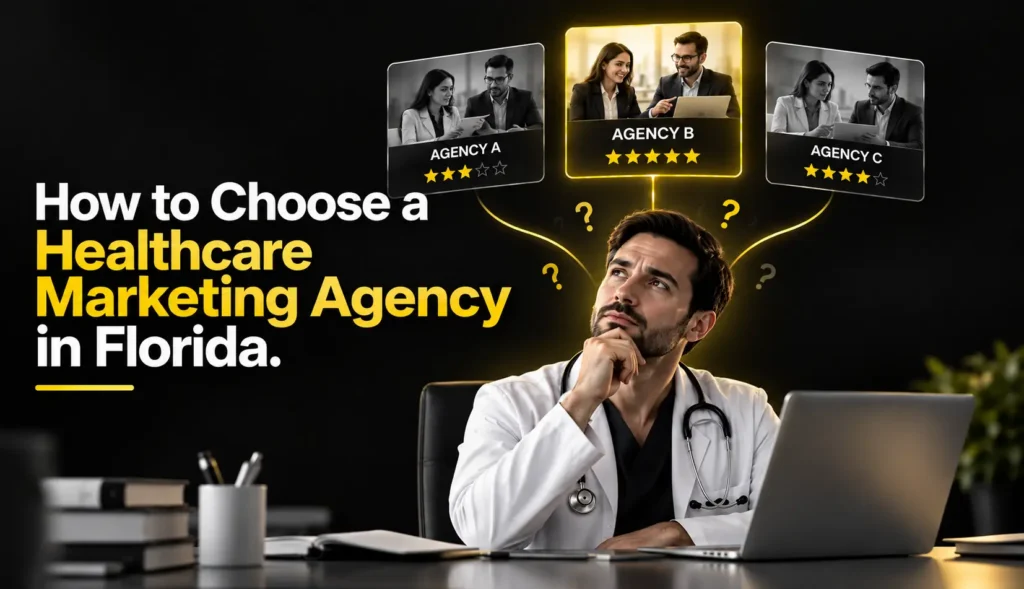
How to Choose a Healthcare Marketing Agency in Florida

Healthcare Marketing Agency in Florida

Florida is one of the most competitive healthcare markets in the country. Between the large hospital networks in Miami, Orlando, and Tampa, the fast-growing private practices in Jacksonville and Fort Lauderdale, and the steady stream of new residents and seasonal patients, there is no shortage of providers competing for attention. Being good at medicine is no longer enough. Patients have to be able to find you, trust you, and book with you.

That’s why many practices, clinics, and health systems work with a healthcare marketing agency. But the wrong partner can waste your budget, put your compliance at risk, and damage your reputation. The right one becomes an extension of your team and a dependable source of new patients.

This guide walks through how to choose a healthcare marketing agency in Florida, from the services to look for to the questions to ask and the red flags to avoid.

Healthcare Marketing Agency in Florida

Why Healthcare Marketing Is Different From Other Industries

A general marketing firm can run ads for a restaurant or a clothing brand. Healthcare is a different game for three reasons.

1. Patients are making a high-stakes decision. Choosing a dentist, dermatologist, or surgeon is not like choosing a pair of shoes. Patients research heavily, read reviews, and look for signs of credibility and empathy before they call.

2. Regulations shape everything. Healthcare marketing has to respect patient privacy rules such as HIPAA, advertising standards from the Federal Trade Commission, and state-specific rules on healthcare advertising and referrals. A single careless testimonial or retargeting setup can create real legal exposure.

3. Trust is the currency. Aggressive, gimmicky tactics that work in retail can backfire in medicine. Healthcare marketing works best when it is educational, transparent, and patient-centered.

A healthcare marketing company that understands these dynamics will build campaigns that are effective and compliant.

Step 1: Define Your Goals Before You Start Searching

Before you talk to any agency, get clear on what you want to achieve. Vague goals lead to vague results. Consider questions like these:

  • Do you want more new-patient appointments, or more of a specific service line, such as orthopedics, cosmetic procedures, or urgent care?
  • Are you opening a new location and need to build awareness from scratch?
  • Do you need to improve your online reputation and Google reviews?
  • Is your website outdated, slow, or failing to convert visitors into patients?
  • What is your realistic monthly marketing budget?

Having these answers lets you judge an agency by whether it can solve your specific problems, not by how polished its pitch is.

Step 2: Look for Proven Healthcare Experience

Industry experience matters more in healthcare than almost anywhere else. When you evaluate a healthcare marketing agency, look for:

  • A healthcare portfolio. Ask to see work for practices similar to yours.
  • Case studies with real numbers. Look for measurable outcomes such as growth in organic traffic, appointment requests, or call volume, not just “brand awareness.”
  • Specialty knowledge. Marketing a plastic surgery practice is very different from marketing a behavioral health clinic or a senior care facility.
  • Client references. A confident agency will let you talk to current or past clients.

Experience in your specific niche is a strong bonus. An agency that already understands your patient journey will get up to speed faster and make fewer expensive mistakes.

Step 3: Understand the Full Range of Healthcare Marketing Services

Not every agency offers the same healthcare marketing services. Some specialize in one channel, while others provide a full-service approach. Here are the core services to look for.

Search Engine Optimization (SEO)

When someone in Florida searches “pediatrician near me” or “orthopedic surgeon in Tampa,” you want to appear at the top. Healthcare SEO involves keyword research, on-page optimization, technical improvements, content creation, and local SEO. Because healthcare falls under Google’s “Your Money or Your Life” category, content must demonstrate expertise, authoritativeness, and trustworthiness. Google explains how it evaluates helpful content in its Search Central documentation.

Local SEO and Google Business Profile Management

For most Florida practices, local search drives the majority of new patients. A strong agency will optimize your Google Business Profile, manage citations, and build location-specific pages for each office or service area.

Website Design and Development

Your website is your digital front door. It should load quickly, work well on mobile, be accessible, and make booking simple. Ask whether the agency builds HIPAA-conscious forms and follows accessibility best practices. You can read more about our approach on our web design services page.

Paid Advertising (PPC and Social Ads)

Pay-per-click campaigns on Google and social platforms can deliver fast visibility, especially for new practices or new service lines. A qualified agency will build campaigns with compliant ad copy, careful audience targeting, and proper conversion tracking.

Content Marketing and Blogging

Educational content builds trust and captures patients who are researching symptoms, treatments, and providers. Look for an agency that can produce medically accurate, well-written content, ideally reviewed by your clinical team.

Reputation Management

Online reviews heavily influence patient decisions. Your agency should help you generate authentic reviews, respond professionally, and monitor your online presence.

Social Media Marketing

Social media humanizes your practice and keeps you connected with your community. The best campaigns feature your providers, share health education, and stay within privacy guidelines.

Email and Patient Retention Marketing

Marketing doesn’t end when a patient books. Email newsletters, appointment reminders, and recall campaigns bring patients back and increase lifetime value.

If you want a closer look at what a full-service partnership might include, explore our healthcare marketing services.

Step 4: Confirm They Understand Compliance

This step separates trustworthy agencies from risky ones. Ask any prospective healthcare marketing company the following:

  • How do you handle patient data, and are you familiar with HIPAA requirements?
  • Do you use tracking pixels or retargeting on pages that could expose protected health information?
  • How do you handle patient testimonials and before-and-after photos?
  • Are you aware of Florida-specific rules on healthcare advertising and patient referrals, such as the Florida Patient Brokering Act?

The U.S. Department of Health and Human Services offers guidance on online tracking technologies and HIPAA, and the Florida Department of Health is a useful resource for state-level information. This article is not legal advice, so always consult your healthcare attorney or compliance officer about your specific situation.

An agency that shrugs off these questions is a red flag.

Step 5: Evaluate Their Local Florida Knowledge

Florida is not one uniform market. A strategy that works in South Florida may not work in the Panhandle. A strong local partner will understand:

  • Regional differences. Miami-Dade, Tampa Bay, Central Florida, and Northeast Florida each have distinct demographics and competitive landscapes.
  • Seasonal patients. Snowbird populations shift demand throughout the year.
  • Multilingual audiences. Spanish-language and Haitian Creole-speaking communities are significant in many parts of the state, and culturally aware marketing can make a real difference.
  • Retiree and Medicare-focused audiences. Florida’s large senior population requires messaging that is clear, respectful, and accessible.

A Florida-based agency often has a natural advantage here because it lives and works in the same markets you serve.

Step 6: Ask About Strategy, Not Just Tactics

Some agencies will pitch you a list of deliverables: “four blogs a month, two social posts a week, one ad campaign.” That is activity, not strategy. A great healthcare marketing agency will start by asking about your patients, your competitors, your capacity, and your revenue goals, then build a plan that ties every tactic to a measurable outcome.

Look for an agency that:

  • Performs a competitive and market analysis before proposing a plan
  • Defines target patient personas
  • Maps the patient journey from search to booking to retention
  • Recommends a channel mix based on your goals, not a one-size-fits-all package

Step 7: Insist on Transparent Reporting

You should never have to wonder what your marketing dollars are doing. Ask what a typical report looks like and how often you’ll receive one. Good reporting should cover:

  • Website traffic and traffic sources
  • Keyword rankings and organic growth
  • Phone calls, form fills, and booked appointments
  • Cost per lead and cost per new patient
  • Return on ad spend

Be cautious of agencies that focus on vanity metrics like impressions and followers while avoiding conversation about calls, appointments, and revenue. The best partners tie their reporting to real patient acquisition.

Step 8: Understand Pricing and Contracts

Pricing for healthcare marketing services varies widely depending on scope, market competitiveness, and agency size. Common models include monthly retainers, project-based fees, and percentage-of-ad-spend arrangements. Whichever you choose, clarify these points:

  • What exactly is included in the monthly fee?
  • Are ad budgets separate from management fees?
  • What is the contract length, and what are the cancellation terms?
  • Who owns the website, ad accounts, and content if the relationship ends?

Be wary of any agency that promises guaranteed #1 rankings, locks you into long contracts with no exit, or refuses to give you access to your own accounts. Reputable agencies are confident enough to earn your business month after month.

Step 9: Evaluate Communication and Cultural Fit

You will work with your agency closely for months or years, so chemistry matters. Pay attention to how they behave during the sales process:

  • Do they listen more than they talk?
  • Do they explain things in plain language, without jargon?
  • Are they responsive and organized?
  • Will you have a dedicated point of contact?
  • Do they respect your clinical expertise and your team’s time?

An agency that treats you like a partner from day one is far more likely to deliver strong results.

Red Flags to Watch For

As you compare options, keep this warning list in mind:

  • Guaranteed results. No one can guarantee rankings or patient volume.
  • No healthcare experience. Learning HIPAA and medical advertising on your dime is risky.
  • Vague or hidden pricing. Transparency should start before you sign.
  • Black-box reporting. If they can’t show you what they’re doing, be concerned.
  • Locked-in ownership. You should own your domain, website, and ad accounts.
  • Cookie-cutter templates. Your practice is unique, and your marketing should reflect that.
  • Pressure tactics. Good agencies don’t rush you into a decision.

Questions to Ask Before You Hire

Bring this checklist to your discovery calls:

  1. What experience do you have with practices like mine?
  2. Can you share case studies and client references?
  3. How do you ensure HIPAA and advertising compliance?
  4. What does your onboarding process look like?
  5. Who will be working on my account?
  6. How do you measure success, and how often will I see reports?
  7. What are your contract terms and cancellation policy?
  8. How do you approach local SEO for multi-location or single-location practices?
  9. What results can I realistically expect, and on what timeline?

Why Work With a Florida-Based Partner Like Sertain Creative

Choosing a local agency gives you a team that understands the communities you serve, the competitive landscape, and the patient behavior unique to Florida. At Sertain Creative, we combine strategic thinking, creative execution, and a deep understanding of how patients search for care. Our approach is built around measurable growth: more visibility, more qualified inquiries, and more booked appointments. Learn more about our team or get in touch to start the conversation.

Frequently Asked Questions

What does a healthcare marketing agency do?

A healthcare marketing agency helps medical practices, clinics, hospitals, and health-related businesses attract and retain patients. Typical services include SEO, website design, paid advertising, content creation, social media, reputation management, and analytics, all done with an understanding of healthcare regulations.

How much do healthcare marketing services cost in Florida?

Costs depend on your goals, specialty, and market. Small practices may invest a modest monthly retainer for foundational services like local SEO and website management, while multi-location groups or highly competitive specialties often budget significantly more, especially with paid ads. Ask for a customized proposal rather than relying on generic price ranges.

How long does it take to see results from healthcare marketing?

Paid advertising can generate leads within days or weeks. SEO and content marketing typically take three to six months or longer to show meaningful momentum, though the timeline varies with competition and your starting point. Be cautious of anyone promising overnight results.

Should I choose a healthcare-specific agency or a general marketing agency?

In most cases, a healthcare-specific agency is the safer choice. Compliance requirements, patient psychology, and industry terminology are unique, and an experienced partner will avoid costly mistakes and ramp up faster.

Is a local Florida agency better than a national one?

Not always, but local knowledge is a real advantage. A Florida-based healthcare marketing company understands regional competition, seasonal patient trends, and the diverse communities you serve, which can improve targeting and messaging.

How do I know if my healthcare marketing agency is performing well?

Look beyond impressions and clicks. Track calls, form submissions, booked appointments, cost per new patient, and overall return on investment. A strong agency will report on these metrics clearly and explain what they mean.

What should I own when working with an agency?

You should own your website, domain name, Google Business Profile, ad accounts, analytics, and content. Confirm this in writing before signing any contract.

Conclusion

Choosing a healthcare marketing agency in Florida is one of the most important business decisions you can make for your practice. The right partner does more than run ads or publish blog posts. They understand your patients, protect your reputation, respect compliance requirements, and build a sustainable pipeline of new appointments.

Start by defining your goals, then look for proven healthcare experience, a full range of healthcare marketing services, strong compliance knowledge, local Florida insight, transparent reporting, and fair contracts. Ask hard questions, watch for red flags, and choose a team that feels like a true partner.

Ready to grow your practice with a healthcare marketing company that understands Florida? Contact Sertain Creative today for a strategy session and find out how we can help you reach more patients.

How a Peptide Marketing Agency Can Transform Your Brand’s Growth in 2026

Peptide Marketing Agency

The peptide industry has exploded in recent years, with new research compounds, wellness clinics, and supplement brands entering the market almost every month. But here’s the catch — having a great product isn’t enough anymore. If your potential customers can’t find you online, your competitors will win the sale instead. This is where a specialized peptide marketing agency becomes essential to your business growth.

At Sertain Creative, we understand the unique challenges peptide brands face — from strict advertising restrictions to complex compliance requirements and a highly competitive digital landscape. In this guide, we’ll walk you through why peptide digital marketing matters, what makes an effective strategy, and how our peptide marketing services can help you scale sustainably.

Peptide Marketing Agency

Why the Peptide Industry Needs Specialized Marketing

Peptides aren’t like typical consumer products. Marketing them requires a nuanced understanding of:

  • Regulatory compliance – Peptide advertising is closely monitored by platforms like Google and Meta, and generic marketing agencies often get accounts flagged or banned.
  • Scientific credibility – Your audience (researchers, clinics, biohackers, and wellness consumers) expects accurate, trustworthy information — not hype.
  • Niche targeting – Peptide customers are highly specific: research chemists, anti-aging clinics, bodybuilding communities, and telehealth providers all require different messaging.
  • Trust-building – Because peptides sit in a somewhat gray regulatory zone in many regions, building authority and credibility is critical for conversions.

A generalist marketing agency simply won’t have the industry knowledge to navigate these challenges. That’s why partnering with a dedicated peptide marketing agency like Sertain Creative gives you a real competitive advantage.

What Is Peptide Digital Marketing?

Peptide digital marketing refers to the specialized online marketing strategies used to promote peptide products, research compounds, clinics, and related services. It combines multiple digital channels into one cohesive strategy, including:

  1. Search Engine Optimization (SEO) – Ranking your website for high-intent keywords like “buy research peptides” or “peptide therapy clinic near me.”
  2. Content Marketing – Educational blog posts, guides, and research-backed articles that build trust and authority.
  3. Paid Advertising (Where Compliant) – Navigating ad restrictions using compliant platforms and creative workarounds.
  4. Email Marketing & Retargeting – Nurturing leads who aren’t ready to purchase immediately.
  5. Social Media Marketing – Building brand presence on platforms that allow peptide-adjacent content.
  6. Conversion Rate Optimization (CRO) – Turning website visitors into paying customers or qualified leads.

Because peptide marketing operates under tighter restrictions than most industries, having a partner who already understands what works — and what gets flagged — saves you time, money, and frustration.

Core Peptide Marketing Services We Offer

At Sertain Creative, our peptide marketing services are built specifically for peptide brands, research chemical suppliers, wellness clinics, and telehealth companies. Here’s what we offer:

1. Peptide SEO (Search Engine Optimization)

We optimize your website structure, content, and backlink profile to help you rank for high-value peptide-related search terms. This includes on-page SEO, technical SEO audits, and content strategy tailored to your niche.

2. Peptide Content Marketing

Our team creates scientifically accurate, engaging content — blog posts, product descriptions, and educational guides — that builds trust with your audience while improving your search visibility.

3. Compliant Paid Media Campaigns

We know how to structure ad campaigns that stay within platform guidelines while still driving qualified traffic to your site.

4. Website Design & Conversion Optimization

A beautifully designed, fast-loading, mobile-friendly website is critical. We design peptide brand websites that convert visitors into customers.

5. Email & Marketing Automation

We build nurture sequences that keep leads engaged, educate them about your products, and guide them toward a purchase decision.

6. Reputation & Brand Authority Building

Through strategic PR, guest posting, and digital outreach, we help peptide brands establish themselves as trustworthy, authoritative voices in the industry.

Why Choose Sertain Creative as Your Peptide Marketing Agency

There are hundreds of marketing agencies out there, but very few understand the peptide and research chemical space at a deep level. Here’s what sets us apart:

  • Industry Expertise – We’ve worked specifically within the peptide, supplement, and wellness verticals, so we know the terminology, audience behavior, and compliance landscape.
  • Data-Driven Strategy – Every campaign is backed by analytics, not guesswork.
  • Compliance-First Approach – We help you avoid the account suspensions and ad rejections that plague inexperienced marketers in this space.
  • Transparent Reporting – You’ll always know exactly where your marketing budget is going and what results it’s generating.
  • Scalable Solutions – Whether you’re a startup peptide brand or an established clinic, our strategies scale with your business.

If you’re ready to explore how we can help, check out our marketing services page or get in touch with our team for a free consultation.

Building an Effective Peptide Marketing Strategy: Step by Step

Step 1: Audit Your Current Online Presence

Before building any strategy, we assess your website, SEO performance, social channels, and competitor landscape.

Step 2: Define Your Target Audience

Are you targeting researchers, clinics, or direct consumers? Each requires a different tone, messaging style, and marketing channel mix.

Step 3: Build a Compliant Content Strategy

We create content calendars filled with SEO-optimized, educational content that satisfies both search engines and platform advertising policies.

Step 4: Optimize for Local & National SEO

If you run a physical clinic, local SEO (Google Business Profile optimization, local citations, and reviews) is critical. For e-commerce peptide brands, national SEO and technical site optimization take priority.

Step 5: Launch Multi-Channel Campaigns

Combining SEO, email, and compliant paid advertising ensures you’re capturing demand at every stage of the buyer’s journey.

Step 6: Monitor, Measure, and Refine

We continuously track key metrics — organic traffic, conversion rates, keyword rankings, and ROI — to refine your strategy over time.

For general best practices around SEO strategy development, resources like Google’s Search Central documentation offer helpful foundational guidance that we adapt specifically for the peptide niche.

Who Needs Peptide Marketing Services?

Our peptide marketing services are ideal for:

  • Research peptide suppliers and e-commerce stores
  • Anti-aging and wellness clinics offering peptide therapy
  • Telehealth platforms prescribing peptide treatments
  • Supplement brands incorporating peptide-based products
  • Compounding pharmacies specializing in peptide formulations

No matter where your business falls in the peptide ecosystem, a tailored digital marketing strategy can help you reach more customers while staying compliant.

Frequently Asked Questions

Q1: What makes peptide marketing different from regular digital marketing?
Peptide marketing requires navigating stricter advertising policies, scientific accuracy in messaging, and a more skeptical, research-oriented audience compared to typical consumer marketing.

Q2: Can peptide companies advertise on Google and Meta?
It depends on the product and region. Some peptide advertising is heavily restricted or banned outright on major platforms. A specialized peptide marketing agency knows how to structure compliant campaigns or identify effective alternative channels.

Q3: How long does it take to see results from peptide SEO?
SEO is a long-term strategy. Most peptide brands begin seeing measurable improvements in organic traffic and rankings within 3–6 months, with significant growth typically occurring after 6–12 months of consistent effort.

Q4: Does Sertain Creative work with international peptide brands?
Yes, we work with peptide businesses across various regions, adapting strategies to local regulations and market conditions.

Q5: What is the cost of peptide digital marketing services?
Pricing depends on the scope of services — SEO, content, paid media, or a full-service package. We offer customized quotes based on your business size and goals. Contact us for a personalized proposal.

Q6: Why should I hire a specialized agency instead of a general marketing firm?
General agencies often lack knowledge of peptide industry compliance rules, leading to wasted ad spend, account bans, and ineffective messaging. A specialized agency like Sertain Creative minimizes these risks while maximizing ROI.

Conclusion

The peptide industry is growing fast, but so is the competition. Without a specialized marketing partner, your brand risks getting lost in a crowded, highly regulated market. That’s why choosing an experienced peptide marketing agency isn’t just a nice-to-have — it’s essential for sustainable growth.

At Sertain Creative, our tailored peptide digital marketing strategies and comprehensive peptide marketing services are designed to help your brand build authority, drive qualified traffic, and convert visitors into loyal customers — all while staying compliant with evolving industry regulations.

Ready to take your peptide business to the next level? Explore our services or schedule a free consultation with our team today.